Remodeling Kitchens, Bathrooms & More — While Earning Your Trust.
Tub-to-Shower Conversion: What to Expect
How a tub-to-shower conversion works, what affects cost and timeline, and how to choose between low-threshold and curbless showers.
11/12/20266 min read
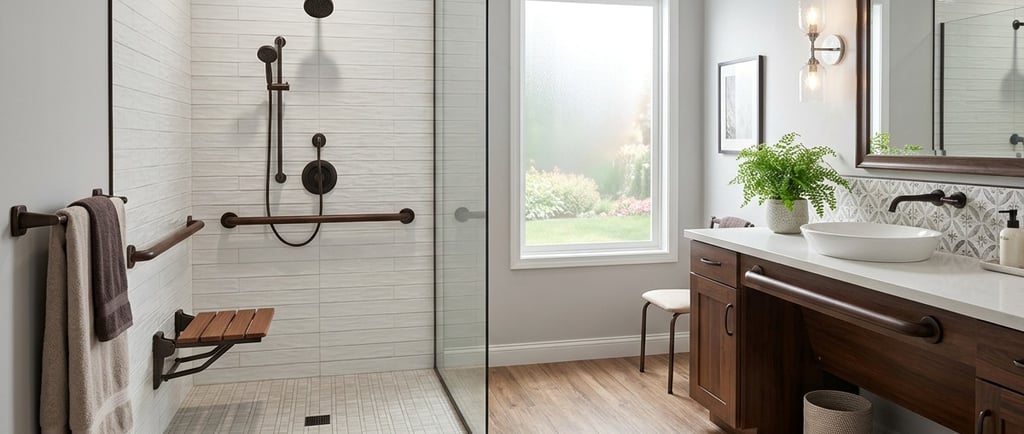
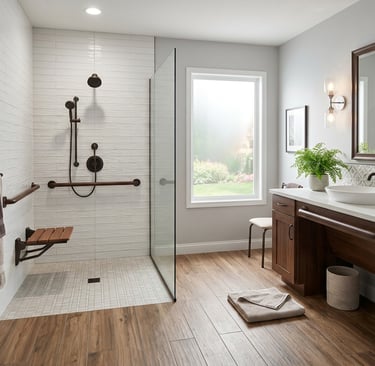
If you rarely take baths, the tub is probably taking up the best space in your bathroom, and stepping over its wall is one of the most common fall risks in a home. Converting it to a walk-in shower solves both problems. Here is what the process involves.
Step 1: Removing the tub
Old cast-iron tubs are heavy and often have to be broken up to remove. Once the tub is out, the subfloor, framing, and drain are exposed. In older homes this is where surprises show up, like water damage or joists that were notched for plumbing years ago. A good contractor checks and repairs these before building the shower.
Step 2: Plumbing
The drain is relocated or resized for the shower, and the valve is set at a comfortable height. Many homeowners add a handheld shower on a slide bar, which is especially useful for seated showering.
Step 3: Waterproofing
This is the step you never see and the one that matters most. A waterproofing membrane goes behind the tile on the walls and under the shower floor. Done properly, the shower stays dry inside the walls for decades.
Step 4: Tile, glass, and accessories
Tile, a built-in bench or niche, grab bars, and a glass door or curtain finish the shower. Slip-resistant floor tile is worth it in any walk-in shower.
Low-threshold or curbless?
Low-threshold showers keep a short curb to contain water. They are simpler to build and work well for most people.
Curbless showers have no step at all, which is ideal for wheelchairs and walkers. They need the shower floor recessed or the bathroom floor built up so water drains properly, which depends on your floor framing.
What affects cost
The main factors are tile choices, glass, how much plumbing moves, whether the shower is curbless, and what repairs are needed once the tub is out. See our Twin Cities bathroom cost breakdown for typical ranges.
Should you keep a tub somewhere?
If you have more than one bathroom, many families convert one and keep a tub in the other for young children or resale. If it is the only bathroom, a conversion is still often the right choice for safety.
Learn more about our walk-in shower conversions, or call 952-522-2202 for a free estimate.
Emergency Service
Follow Us
© 2026. All rights reserved.
Phone
Dakken Services (Dakken, LLC) is a licensed Minnesota remodeling contractor (MN License BC810052) based in Lakeville, serving the Twin Cities south metro since 2014. We specialize in aging-in-place and accessibility remodeling, plus kitchens, bathrooms, basements, decks, flooring, stairs and handyman repairs.