Remodeling Kitchens, Bathrooms & More — While Earning Your Trust.
Bathroom Remodel Costs in the Twin Cities: A Room-by-Room Breakdown
What a bathroom remodel costs in the Twin Cities, broken down by room and scope: conversions, tile, plumbing, fixtures, and accessibility upgrades.
11/1/20266 min read
Every bathroom estimate starts with the same question: how much will this actually cost in the Twin Cities? The honest answer is that it depends — on the size of the room, whether plumbing moves, what tile and fixtures you choose, and how much hidden work shows up once the walls open. Twin Cities homes add their own variables, too: older plumbing, plaster walls, and layouts that were never designed for a modern primary bathroom.
You cannot price a bathroom remodel from a single number, because the room you are remodeling and the choices you make change the total by tens of thousands of dollars. A powder room refresh and a primary bathroom gut renovation are both called bathroom remodels, but they share almost nothing in terms of scope, materials, or labor. This breakdown answers the question room by room, so you can compare a realistic range for your bathroom instead of guessing from a statewide average.
What Drives the Price: Room Size, Scope, and Materials
A powder room that only needs a new vanity, toilet, and paint is a different project from a primary bathroom that needs a new shower, new tile, new plumbing, and a layout change. Before you compare quotes, it helps to separate the three things that move the price most: room size, scope, and materials.
The cost differences between a $12,000 bathroom and a $50,000 bathroom are rarely about one luxury item. They come from a combination of decisions — how much tile, whether the tub becomes a shower, how far plumbing moves, and how many custom elements are involved. Small choices add up in a room this small, which is why two bathrooms that look similar on paper can be priced $20,000 apart.
This breakdown separates those decisions, so you can see where the money goes and where you can save without cutting corners that matter. The most useful way to think about a bathroom budget is not as a single number, but as a range for your room type, adjusted for the specific choices below:
Tub-to-shower conversion. Replacing a tub with a walk-in shower usually costs $6,000 to $12,000 for the conversion alone, before tile and fixtures. The range depends on whether the drain moves, whether the shower needs a new valve and waterproofing system, and whether the walls need to be rebuilt to support tile.
Tile. Tile is one of the most visible cost drivers, and also one of the most variable. A standard ceramic tile floor and shower surround is far less expensive than large-format porcelain, natural stone, or a custom mosaic — and labor rises with tile size, pattern complexity, and the amount of cutting required around niches, windows, and fixtures.
Plumbing moves. Keeping the toilet, sink, and shower in their current locations is the simplest way to hold the budget. Each move adds labor, materials, and inspection time, and in older Twin Cities homes it can also reveal cast-iron or galvanized lines that need replacement while the walls are open.
Fixtures and finishes. A vanity, toilet, mirror, and lighting package can run a few thousand dollars at the modest end or well over $10,000 with a double vanity, custom mirror, and high-end faucet. The big price gaps in fixtures are rarely visible at first glance: a toilet that uses less water and flushes reliably, a shower valve that holds temperature, a vanity that resists moisture — these are the differences that show up over the first five years, not the first five days.
The cheapest way to control the budget is to keep the layout. Moving a toilet or a shower drain usually means opening the floor, rerouting pipes, and reworking tile and waterproofing. Keeping fixtures in place lets you spend the same budget on better tile, a better shower valve, and better lighting — the things you notice every day.
Powder Room vs. Primary Bathroom: Different Jobs, Different Budgets
A powder room is the simplest remodel there is. There is no tub or shower, so there is no waterproofing, no tile surround, and usually no plumbing moves. A cosmetic powder room update — vanity, toilet, faucet, mirror, light, paint, and flooring — typically runs $5,000 to $12,000 in this market. Because the room is small, the per-square-foot numbers look high, but the total stays modest and the job is usually done in days, not weeks.
A hall or guest bathroom, usually with a tub-shower combination, is the middle case. Typical Twin Cities ranges run $15,000 to $30,000 depending on whether the tub stays, how much tile you choose, and the condition of the plumbing. This is the bathroom where a tub-to-shower conversion is worth thinking carefully about: if it is the only tub in the house, keeping a tub is often the better call for resale and for households with small children.
A primary bathroom is where the large budgets live, and for a practical reason: it is the room you use twice a day, every day, and it usually gets the most scope. Separate shower and soaking tub, double vanity, heated floor, full tile — a primary remodel in this market typically runs $30,000 to $60,000, and large rooms with layout changes go beyond that. If you want to see which finishes homeowners are asking about this year, our roundup of bathroom trends Twin Cities homeowners are asking for in 2026 covers the current requests, from tile choices to lighting.
Accessibility Upgrades That Pay Off Every Day
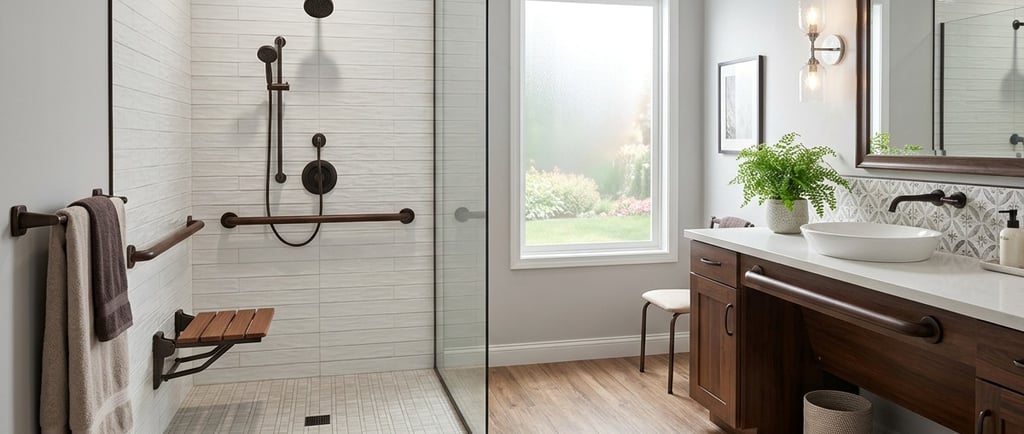
Accessibility upgrades are some of the most satisfying bathroom investments, because they are used every day and they extend the time a person can stay safely at home. For aging homeowners and people with mobility challenges, the right bathroom changes can mean independence instead of a move. The most useful upgrades include:
Grab bars. Properly installed grab bars in the shower, near the toilet, and at the tub cost far less than a fall. They should be anchored into blocking or studs, not just tile, and placed where hands naturally reach.
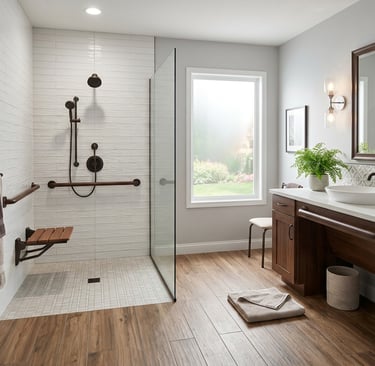
Curbless showers. A shower with no curb and a gently sloped floor removes a trip hazard and makes the room easier to clean. Curbless showers require careful waterproofing and drainage, so they are best planned with a contractor who does them regularly.
Comfort-height toilets and bidets. A comfort-height toilet sits about 17 to 19 inches high, which makes sitting and standing easier on knees and hips. A bidet seat, which typically adds a few hundred to about $1,500 depending on features, is a comfort and hygiene upgrade many homeowners use daily.
Wider doorways. If a remodel already opens walls, widening a bathroom doorway to 32 or 36 inches improves access for walkers and wheelchairs and makes the room feel larger. It is far easier to do during a remodel than as a standalone change later.
Most of these upgrades add only a small percentage to a full remodel, especially when they are planned from the start. Adding them later, after tile and walls are finished, usually costs more and causes more disruption. If staying in your home long term matters to you, bring accessibility into the first conversation, not the last.
What a Full Remodel Actually Includes
A full bathroom remodel in the Twin Cities usually involves removing the old tub or shower, toilet, vanity, and flooring down to the studs and subfloor, then rebuilding with new waterproofing, plumbing, electrical, tile, and fixtures. It is not just a cosmetic refresh — it is a rebuild of the room's systems, which is why the price is higher than a simple update.
The final price depends on the size of the room, the number of plumbing moves, and the quality of the finishes. Learn more about our bathroom remodeling process.
How to Get an Accurate Estimate
Get a written estimate that separates labor, materials, and allowances, so you can see what is included and what could change. A lump-sum number with no breakdown is hard to compare and hard to hold to when the project starts.
The easiest way to get an accurate number is to invite a contractor to your home, walk through the room, and talk through the scope in person. Photos and measurements help, but they do not show plumbing condition, subfloor issues, or the layout constraints that affect price.
A contractor should be able to tell you which parts of the estimate are fixed and which parts could change if hidden damage is found. Ask how change orders are priced and whether permits and inspections are included.
Planning in Winter: When to Start a Bathroom Remodel
Winter is a practical time to plan a bathroom remodel in Minnesota, because indoor work is not weather-dependent and contractors often have more availability than in the spring rush. Planning in winter also gives you time to order tile and fixtures before the busy season.
A permit and materials timeline matters more than a start date. Tile, vanities, and shower systems can have lead times of several weeks, and ordering early avoids a bathroom sitting half-finished while you wait for a backordered item.
If you book a winter start, clarify what happens if a material is backordered and whether the contractor will protect floors and keep dust contained during cold weather, when windows stay closed.
Starting in winter often means your new bathroom is ready by spring, which is when most homeowners actually want to use it — and when resale activity picks up if you are thinking about selling.
Dakken Services remodels bathrooms across the Twin Cities metro, including Lakeville, Minneapolis, St. Paul, Bloomington, Edina, Richfield, Apple Valley, Burnsville, Eden Prairie, Prior Lake, Farmington, Shakopee, Elko New Market, and West St. Paul. Call (952) 522-2202 to talk through your bathroom, or request a consultation and we will schedule a visit to your home.
Add Dakken Services as a preferred source on Google.
Emergency Service
Follow Us
© 2026. All rights reserved.
Phone
Dakken Services (Dakken, LLC) is a licensed Minnesota remodeling contractor (MN License BC810052) based in Lakeville, serving the Twin Cities south metro since 2014. We specialize in aging-in-place and accessibility remodeling, plus kitchens, bathrooms, basements, decks, flooring, stairs and handyman repairs.