Remodling & Repairing Homes, While Earning Your Trust.
Aging In Place
Aging With Style of Life and Home
5/18/20264 min read
As more Americans choose to remain in their homes later in life, aging-in-place home modifications are no longer considered specialty upgrades — they are becoming a standard part of thoughtful home design. The goal is simple: create a living environment that allows people to maintain independence, safety, and dignity as mobility, balance, vision, and strength naturally change over time.
What once looked “medical” or institutional has evolved dramatically. Today’s aging-in-place renovations blend accessibility with modern aesthetics, creating homes that are safer without sacrificing beauty. From smart technology to elegant bathrooms and redesigned living spaces, these updates are reshaping how families think about long-term home ownership.
One of the most important areas of aging-in-place design begins with structural and architectural updates. Traditional homes were rarely built with long-term mobility in mind. Steps at entrances, narrow hallways, and tight bathroom layouts can become major barriers as homeowners age. Modern renovations address these challenges proactively.
Zero-step entries are becoming increasingly popular because they eliminate one of the most common hazards in any home: stairs at exterior doors. Flush entryways and gently sloped ramps allow easier access for wheelchairs, walkers, and individuals with balance concerns. Even for people who are currently healthy and active, removing tripping hazards significantly reduces the risk of injury. These entries also make homes more convenient for strollers, grocery carts, and moving furniture, meaning the design benefits everyone — not just seniors.
Wider doorways and hallways are another critical modification. Standard interior doors are often too narrow for mobility devices, making navigation frustrating or impossible. Expanding doorways to 36 inches or more and widening hallways to at least 42 inches creates smoother movement throughout the home and provides enough turning space for wheelchairs or walkers. These upgrades also make homes feel more open and spacious, adding value far beyond accessibility.
Many homeowners are also embracing first-floor living layouts. Relocating the primary bedroom and a full bathroom to the main level eliminates the need to navigate stairs daily. While staircases may not seem like a problem today, planning ahead allows homeowners to remain independent longer without requiring costly emergency renovations later. Multi-story homes can still remain functional and beautiful while offering a safer long-term living arrangement.
Smaller details matter as well. Lever-style door handles and faucets are replacing traditional knobs throughout modern homes. These simple upgrades are incredibly helpful for individuals with arthritis, reduced grip strength, or hand injuries. A lever can be operated with an elbow or forearm, making everyday tasks significantly easier without drawing attention to the accessibility feature itself.
Bathrooms remain one of the highest-risk areas in any home due to slippery surfaces and tight spaces. Because falls are a leading cause of injury among older adults, modern bathroom renovations focus heavily on safety and prevention.
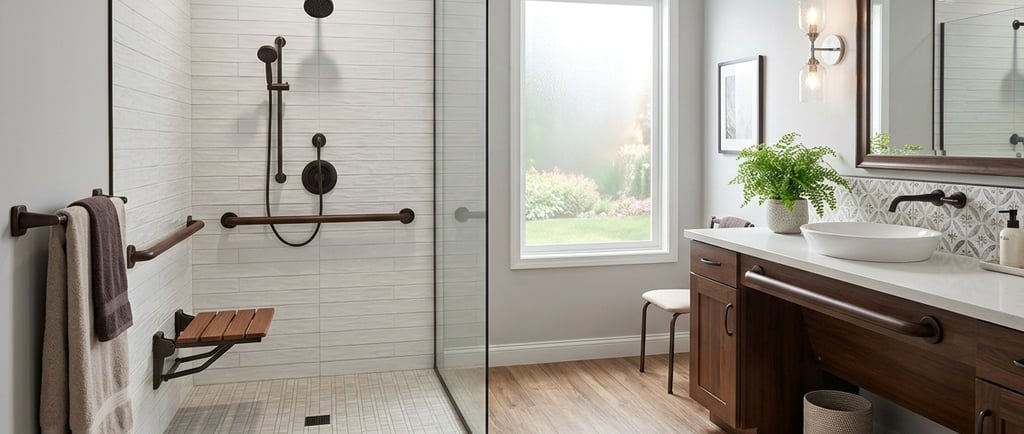
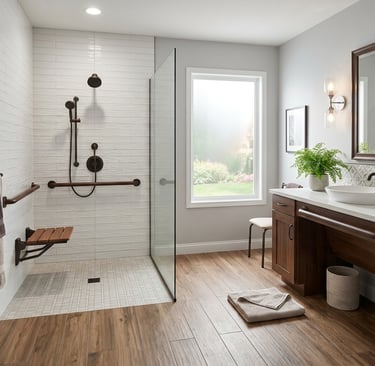
Curbless showers have become one of the most requested aging-in-place features. Unlike traditional tubs or raised shower thresholds, zero-entry showers allow smooth, uninterrupted access without stepping over barriers. This greatly reduces tripping risks while also accommodating wheelchairs or shower chairs if needed later. Combined with slip-resistant flooring and handheld shower heads, these spaces create both comfort and peace of mind.
Grab bars have also undergone a major transformation. In the past, they were purely functional and often unattractive. Today’s designs cleverly disguise support bars as towel racks, decorative shelves, or stylish bathroom hardware. This allows homeowners to maintain a high-end aesthetic while incorporating essential safety features. The result is a bathroom that feels luxurious rather than clinical.
Comfort-height toilets are another subtle but important upgrade. Taller toilets reduce strain on knees and hips, making sitting and standing easier for aging adults. When paired with properly positioned support bars, these installations dramatically improve bathroom safety and independence.
The kitchen is another area where thoughtful modifications can greatly improve quality of life. Since kitchens are used constantly throughout the day, accessibility improvements here can help homeowners maintain confidence and independence for many years.
Multi-level countertops are becoming more common in universal design. Lower countertop sections allow seated food preparation while still maintaining traditional-height surfaces for standing users. This flexibility supports a wide range of mobility needs without making the kitchen appear specialized.
Storage design has also evolved. Drawer-style cabinetry and pull-out shelves eliminate the need to bend, kneel, or reach deep into cabinets. Pots, pans, dishes, and pantry items become easier to access, reducing strain and lowering the risk of falls or injuries caused by awkward movement. Soft-close drawers and touch-latch systems add convenience while improving usability for those with arthritis or limited hand strength.
Modern appliances now play a major role in safety-focused kitchens. Touchless faucets reduce the need for gripping and twisting. Induction cooktops remain cool to the touch, significantly lowering burn risks while still cooking efficiently. Side-opening ovens reduce dangerous reaching across hot surfaces and improve accessibility for seated users. These innovations are not only safer — they also create a more efficient and modern cooking experience.
Technology is rapidly changing the future of aging in place as well. Smart home integration is allowing homeowners to remain independent longer while giving family members additional peace of mind.
Automated locks and smart-entry systems remove the hassle of small keys and provide easier access for caregivers or family members. Voice-activated assistants can control lighting, temperature, televisions, security systems, and window blinds without requiring someone to physically move through the home repeatedly. For individuals with mobility limitations, this technology can dramatically improve daily comfort.
Motion-sensor lighting is one of the simplest but most effective safety additions available today. Hallways, staircases, bathrooms, and kitchen pathways automatically illuminate at night, reducing the likelihood of dangerous falls in dark environments. Toe-kick lighting beneath cabinets and soft nighttime floor illumination provide visibility without harsh overhead lights that disrupt sleep.
The growing popularity of aging-in-place design reflects a broader shift in how people think about homeownership and independence. Rather than waiting for a health crisis to force a move into assisted living, many homeowners are choosing to prepare their homes early. These modifications not only improve safety but also increase comfort, convenience, and long-term property value.
Perhaps most importantly, aging-in-place renovations preserve something deeply personal: the ability to remain in a familiar environment surrounded by memories, neighbors, and routines. Home is more than a building. It represents stability, identity, and independence. Thoughtful modifications allow people to protect those connections while adapting gracefully to the realities of aging.
The future of home design is not simply about accessibility. It is about creating spaces that work beautifully for every stage of life.
Chat Or Click Link to Chat
Learn More
© 2026. All rights reserved.
Phone
Dakken Home Services is a trusted, customer-focused home repair and improvement company dedicated to helping homeowners maintain safe, functional, and comfortable living spaces. Built on a foundation of reliability, craftsmanship, and genuine care for people, Dakken Home Services offers a full range of handyman solutions designed to meet everyday needs—from small repairs and routine maintenance to larger home improvement projects such as decking, fencing, stair work, and structural updates. No job is too small, and every project is approached with the same level of professionalism, attention to detail, and commitment to quality.
What truly sets Dakken Home Services apart, however, is its specialized focus on supporting individuals who wish to age in place, as well as those living with disabilities. The company recognizes that a home is more than just a structure—it is a place of independence, dignity, and security. As mobility and accessibility needs change, Dakken Home Services works closely with clients and their families to create customized solutions that allow individuals to remain safely in their homes for as long as possible.
These services include thoughtful home modifications such as the installation of grab bars and handrails, stair and entryway improvements, wheelchair ramps, widened doorways, non-slip flooring solutions, bathroom accessibility upgrades, and other structural adjustments tailored to each individual’s unique situation. Every modification is designed not only for safety, but also for ease of use and long-term durability. The team takes the time to understand the specific challenges each client faces and develops practical, effective solutions that blend seamlessly into the home’s existing design.
At Dakken Home Services, the approach is highly collaborative. The company believes that the best results come from working with customers, not just for them. From the initial consultation through project completion, clients are involved in the decision-making process, ensuring that their needs, preferences, and concerns are fully addressed. Clear communication, honest recommendations, and transparent pricing are central to every interaction, helping to build trust and long-lasting relationships.
In addition to technical expertise, Dakken Home Services is driven by compassion and respect. The team understands that working in someone’s home—especially when it involves sensitive life transitions—requires patience, empathy, and professionalism. Whether assisting an aging homeowner who wants to maintain independence or helping a family adapt a space for a loved one with special needs, the goal is always to provide solutions that improve daily living while preserving comfort and peace of mind.
Ultimately, Dakken Home Services is more than a handyman company—it is a partner in creating safer, more accessible homes. By combining skilled workmanship with a people-first approach, the company delivers results that not only fix and improve homes but also enhance the quality of life for those who live in them.